The Mississippi State Department of Health (MSDH) is monitoring emerging information regarding Andes virus, a type of hantavirus, while continuing to provide information on hantavirus infections and prevention.
Although Andes virus has recently received increased attention because of international outbreaks and its ability to spread under limited circumstances between people, the risk to Mississippi residents remains very low.
On This Page
Important Information for Mississippi Residents
At this time:
- Andes virus is primarily found in South America.
- Human infections in the United States are extremely uncommon.
- There is no known established animal reservoir for Andes virus in Mississippi.
- Most Mississippi residents are not at increased risk.
Mississippians at risk would primarily be:
- Those traveling internationally
- Those in close contact with a confirmed infected individual.
Mississippi residents should understand that the majority of hantavirus-related concerns within the United States involve rodent exposure rather than person-to-person spread.
What Is Andes Virus?
Andes virus (ANDV) is a specific type of hantavirus found primarily in South America that can cause Hantavirus Pulmonary Syndrome (HPS).
Hantavirus Pulmonary Syndrome is a potentially life-threatening respiratory infection. It's the most serious danger in cases of Andes virus.
Unlike other known hantaviruses, Andes virus has documented evidence of limited person-to-person transmission among close contacts.
Transmission between people is believed to occur primarily through:
- Prolonged close contact
- Exposure to respiratory secretions or body fluids
- Household exposure
- Intimate contact
- Spending extended time in enclosed spaces with symptomatic individuals
People are believed to be most infectious while symptomatic.
What Is Hantavirus?
Hantaviruses are a family of viruses carried primarily by rodents. In the United States, hantaviruses most commonly cause Hantavirus Pulmonary Syndrome (HPS), a severe respiratory disease affecting the lungs and heart.
The most common rodent carrier in the United States is the deer mouse.
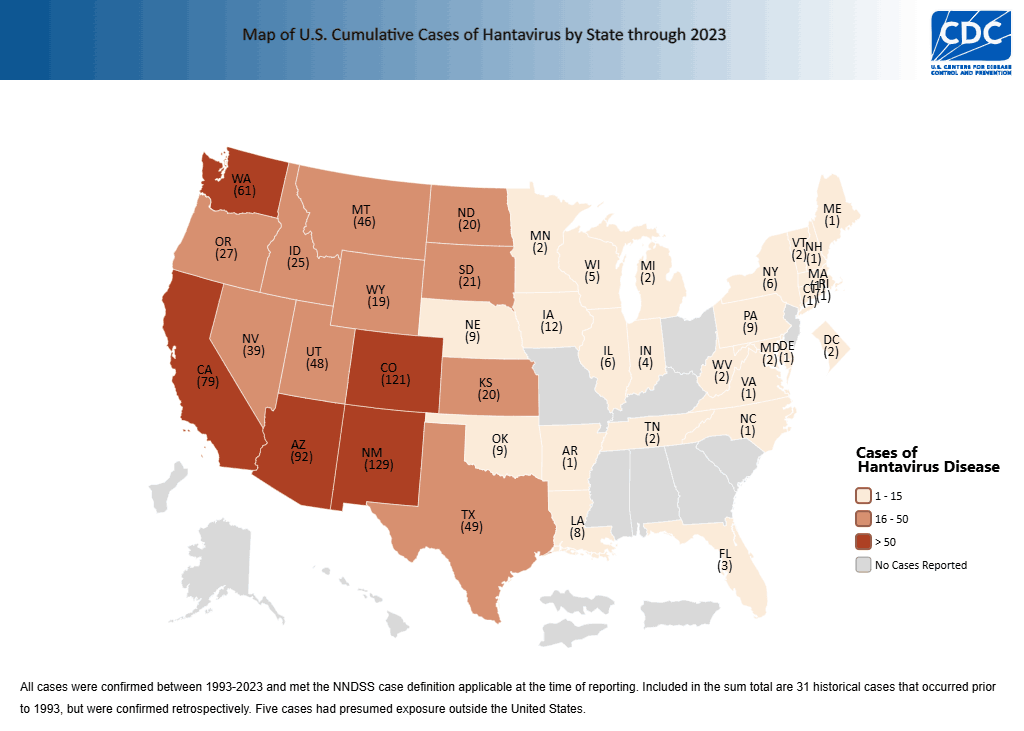
Most reported hantavirus cases in the United States occur in the Southwest, with 94% of the cases reported west of the Mississippi River.
No hantavirus cases have been reported in Mississippi since it became nationally reportable in 1993.
Andes Virus/Hantavirus Comparison
| Category | Andes Virus | Typical U.S. Hantavirus |
|---|---|---|
| Geographic distribution | Primarily South America | North America and other regions worldwide |
| Primary source | Rodents | Rodents |
| Person-to-person spread | Limited documented transmission possible | Not known to occur |
| Risk to Mississippi residents | Very low | Low, but possible through rodent exposure |
| Main risk factors | International travel or close contact with infected individuals | Exposure to rodent urine, droppings, saliva, or nests |
| Incubation period | Approximately 4–42 days | Approximately 1–8 weeks |
| Symptoms | Similar to HPS | Similar to HPS |
| Treatment | Supportive care | Supportive care |
| Vaccine available | No | No |
How Andes Virus and Hantavirus Spread
Most hantavirus infections occur through exposure to infected rodents.
Common modes of transmission include:
- Breathing contaminated air particles from rodent urine, droppings, or nesting materials
- Touching contaminated surfaces and then touching the eyes, nose, or mouth
- Rodent bites or scratches (rare)
- Handling infected rodents or nests
Activities that may increase risk include:
- Cleaning sheds, barns, garages, cabins, or storage areas
- Disturbing rodent nests
- Farming or outdoor work
- Camping or sleeping in rodent-infested locations
Symptoms of Andes Virus or Hantavirus Infection
Symptoms typically develop after exposure and often begin with flu-like symptoms.
Early Symptoms
- Fever
- Fatigue
- Muscle aches
- Headache
- Chills
- Dizziness
- Nausea
- Vomiting
- Diarrhea
- Abdominal pain
- Loss of appetite
Severe Symptoms
- Cough
- Shortness of breath
- Chest tightness
- Fluid accumulation in the lungs
- Low blood pressure
- Respiratory failure
As illness progresses:
Seek medical attention immediately if symptoms develop following rodent exposure or relevant travel history.
Prevention
The best prevention is reducing rodent exposure.
Preventive steps include:
- Seal openings in homes and buildings
- Store food securely
- Remove rodent nesting sites
- Use rodent control measures
- Avoid sweeping or vacuuming dry droppings
- Spray contaminated areas with disinfectant before cleanup
- Wear gloves and protective equipment when appropriate
- Wash hands after cleanup activities
For Healthcare Providers
Testing and Diagnosis
Diagnosing hantavirus infection can be challenging because early symptoms often resemble influenza and other respiratory illnesses.
Testing may include:
Healthcare providers should consider:
- Exposure history
- Rodent exposure
- Travel history
- Clinical presentation
Treatment
Currently there is:
- No specific antiviral treatment
- No licensed vaccine
Treatment focuses on supportive medical care including:
- Hospitalization when needed
- Intensive care support
- Oxygen therapy
- Mechanical ventilation
- Fluid and blood pressure management
Early recognition and treatment improve outcomes.